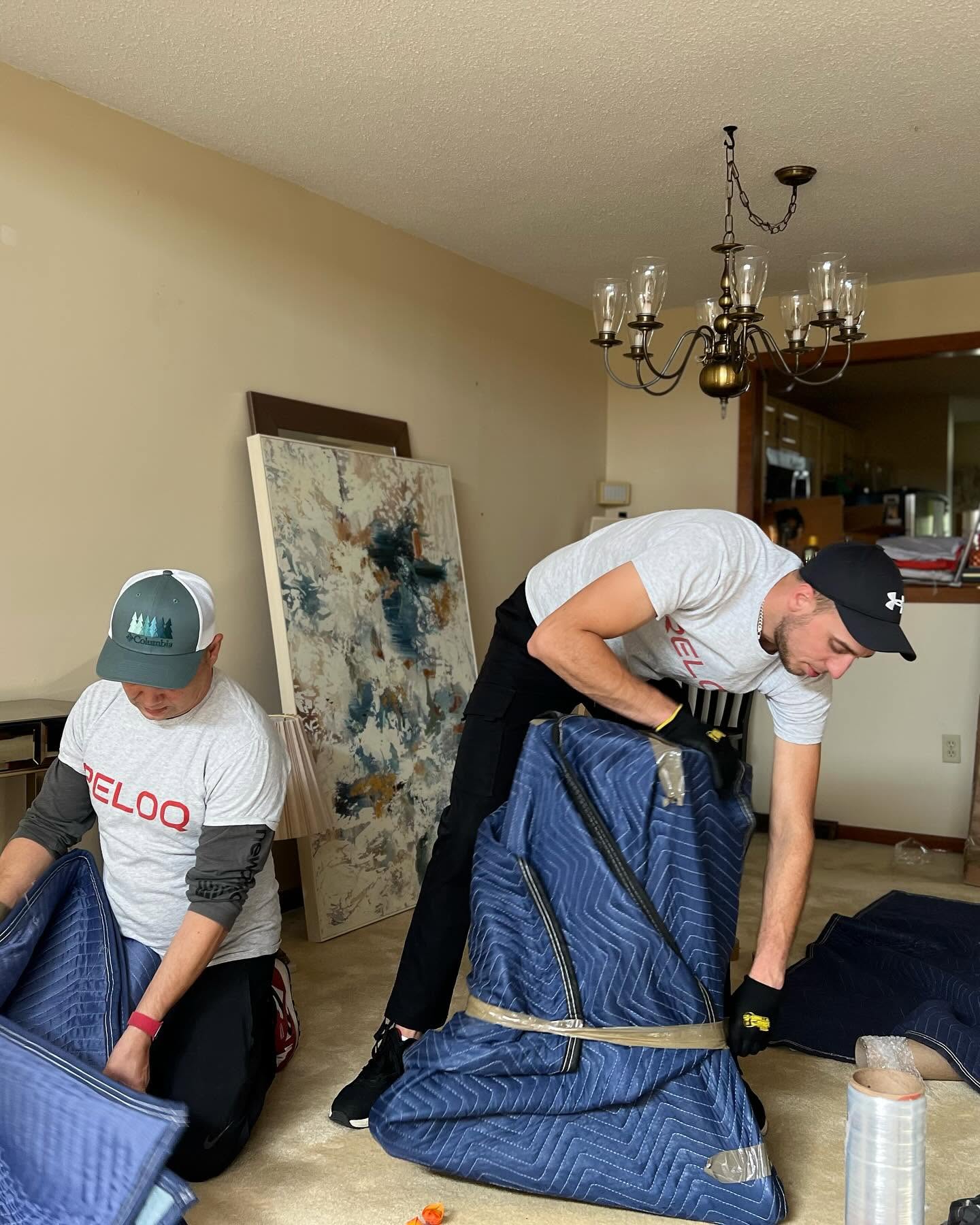
When people picture a move, they picture the truck. The part they don’t see is everything that happens before it — hundreds of items, thousands of decisions about what goes where, and hours of packing done carefully enough to protect a whole home, but efficiently enough that it doesn’t take all week.
We wanted to show that side of the process, so we filmed one of our teams preparing an entire home for a long-distance move.
A successful move starts long before the truck arrives. Professional packing, careful protection, and organized preparation are what keep your belongings safe every step of the journey. From the first box to the final delivery, every detail matters.
Here’s what that preparation actually looks like, step by step.
It’s easy to think of moving day as the main event — the truck pulls up, boxes go in, boxes come out. But by the time a truck is loaded, the outcome of the move has mostly already been decided.
A cross-country trip means a longer time in transit, more handling, and less opportunity to fix a packing mistake once the truck is on the road. That’s why the real work happens earlier: sorting, protecting, and organizing an entire household so that everything is ready to travel before it ever leaves the house.
Packing a full household for a long-distance move starts with knowing exactly what you’re working with. Our team goes room by room, identifying what needs a box, what needs to be wrapped individually, and what needs to be disassembled before it can be packed at all.
This step is less visible than loading a truck, but it’s where most of the planning happens — figuring out how many boxes a home actually needs, what materials different items require, and in what order rooms should be tackled so nothing gets missed.
Not every box gets packed the same way, and that matters more on a cross-country trip than it does across town. Dishes, electronics, artwork, and furniture all need different types of protection to hold up over days on the road rather than a couple of hours.
This is also the part of the process that takes the most hands-on work — and the most practice to do well. Each item gets wrapped and cushioned individually, with the packing material matched to what it’s protecting, not just grabbed at random. An experienced team moves through this quickly without cutting corners: years of doing this means knowing exactly how much padding a mirror needs versus a lamp, or how a dresser should be wrapped so drawers don’t shift in transit — without having to stop and figure it out box by box.
Boxes get packed by weight and fragility, not just by what fits. Fragile and high-value items get extra padding — and sometimes custom crating — while everything else gets labeled clearly, so it’s obvious what’s inside and where it belongs once it arrives. We go deeper into the reasoning behind this in our guide to packing for a long-distance move.
Packing and organizing aren’t quite the same thing. A home can be fully packed and still be hard to load efficiently if boxes and furniture aren’t staged and grouped with the truck in mind.
Our team organizes packed items by room and by loading priority, so that when it’s time to load, there’s a clear sequence rather than a scramble. Heavier furniture and larger items get identified ahead of time; fragile boxes get grouped and set aside so they’re handled last, not buried under everything else.
All of this — the sorting, the wrapping, the labeling, the staging — exists for one reason: so that nothing is left to chance once the truck is loaded and on its way. A long-distance move gives you far less room to fix a packing mistake mid-route than a short local one does, which is exactly why this early stage gets so much attention.
By the time the truck actually pulls away, much of the preparation that determines a successful move has already been completed.
Good packing shouldn’t be something you have to think about on moving day. That means:
That’s what “every detail matters” is supposed to mean — not just as a tagline, but as the reason a long-distance move arrives in one piece.
Planning a long-distance move? Contact RELOQ for a clear, straightforward moving estimate.
Excellence in every move with years of experience in the moving industry
Continue