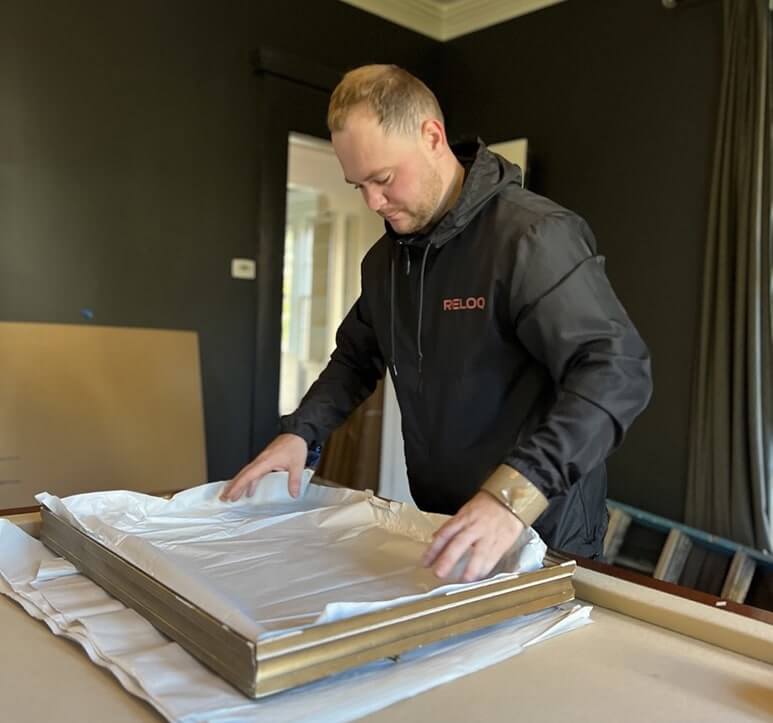
Packing fragile items starts with confidence. It usually ends with doubt. Somewhere in between, there’s a box you don’t want to open later. You know the one.
We’re RELOQ, a moving services company, all Massachusetts born and raised. We’ve packed things that absolutely should not break. And didn’t. Because packing fragile items properly isn’t about being careful in general. It’s more structured. Slightly obsessive. Intentionally repetitive.
Also — most damage doesn’t happen very obviously. No crashes, no cinematic moments. Just a small shift inside a box. A quiet tap. That’s enough.
People think packing fragile items means adding more softness. More wrap, more layers, more something. Not exactly.
It’s about controlling movement. That’s the real problem. Not impact, not pressure — movement. If something can move inside a box, it will. Eventually. Probably at the worst time. The goal becomes simple:
Simple. Not easy. Also, boxes lie. They look stable — usually they’re not.
Let’s take a closer look at packing materials you can find in stores today.
Packing paper doesn’t impress anyone. No bubbles, no texture, just paper. And yet it’s essential.
It wraps cleanly. It adapts. It doesn’t leave ink stains like newspaper — which, for some reason, people still use. It’s your first layer. Always.
Everything else builds on it.
Bubble wrap is satisfying. Let’s acknowledge that. It’s also useful. But only if you use it correctly. It’s a secondary layer, not the whole system.
Wrapping something only in bubble wrap is like wearing a jacket without a shirt. Technically covered. Not comfortable.
It absorbs shock, yes. But it doesn’t stop movement unless combined with proper packing.
Foam sheets are for items that don’t just break — they scratch, dent, mark in ways that feel personal.
Mirrors, frames, electronics. Smooth surfaces. They’re thin, controlled, intentional. Not flashy. But effective.
Packing peanuts fill space. That’s their role. They’re good at it. Until they’re not. They shift. They escape. They appear later in places you don’t remember packing them.
Use them — but combine them with structure. Don’t rely on them to solve everything.
Dish packs. Glass dividers. Wardrobe boxes. They exist because standard boxes aren’t always enough.
Dish packs have thicker walls. Glass dividers prevent contact. Contact is the problem, remember? People skip these to save time or money. Then compensate with more wrapping. It’s not the same.
You’ve got to start with wrapping everything individually. No stacking bare items. Not even for a second.
Packing paper first. Then bubble wrap if needed. Secure the wrap — not the item. Tape should hold layers together, not cling to surfaces like it’s making a decision.
Before anything goes in the box cushion the bottom, build a base layer. Crumpled paper, foam — something that absorbs the first contact when the box is set down. Which it will be. Multiple times. Not always gently.
Then you’ve got to place items carefully. Heavier items go first. Bottom of the box. Plates? Vertical. Like records. Not stacked. It distributes pressure better. Feels counterintuitive until it isn’t. Glasses upright. Always. Arrangement matters more than people expect.
Filling the space comes after. Use packing paper, foam, peanuts — whatever fits. But fill it. If something moves, it’s not done. If nothing moves, you’re close.
The final step is sealing and marking. Seal the box properly. Label it “FRAGILE”. Mark orientation. Will everyone respect the label? Ideally. Realistically — sometimes. Still worth doing.
At RELOQ, this isn’t guesswork.
We’re Massachusetts locals. We’ve handled moves where fragile items weren’t just fragile — they were irreplaceable. Financially, emotionally, structurally.
Our approach is methodical. Maybe a little excessive, until you see the results:
We also offer full-service packing. And we’ve done it enough times that it becomes predictable. In a good way.
It’s a combination. Packing paper for wrapping, bubble wrap for cushioning, filler materials for stability. No single material handles everything.
Wrap each piece individually. Paper first, then bubble wrap. Place upright. Fill all gaps. Movement is the issue. Always.
You can. It’s inconsistent. They shift. They compress unevenly. Better as secondary support, not primary protection.
Wrap each plate. Pack vertically. Use a dish pack box if possible. Add padding above and below. Think in layers.
If the items matter — yes. Professionals reduce risk because they follow a system. Not intuition.
Packing fragile items properly is not complicated. It just requires attention in places people tend to skip. It’s not about being extra careful — it’s about being precise.
At RELOQ, we treat packing as part of the move, not a separate task. It’s integrated. Planned. Executed without improvisation unless necessary.
Because what you’re packing isn’t just stuff. It’s the expectation that when you open that box later, everything inside still makes sense.
And ideally — still exists in one piece.
Excellence in every move with years of experience in the moving industry
Continue