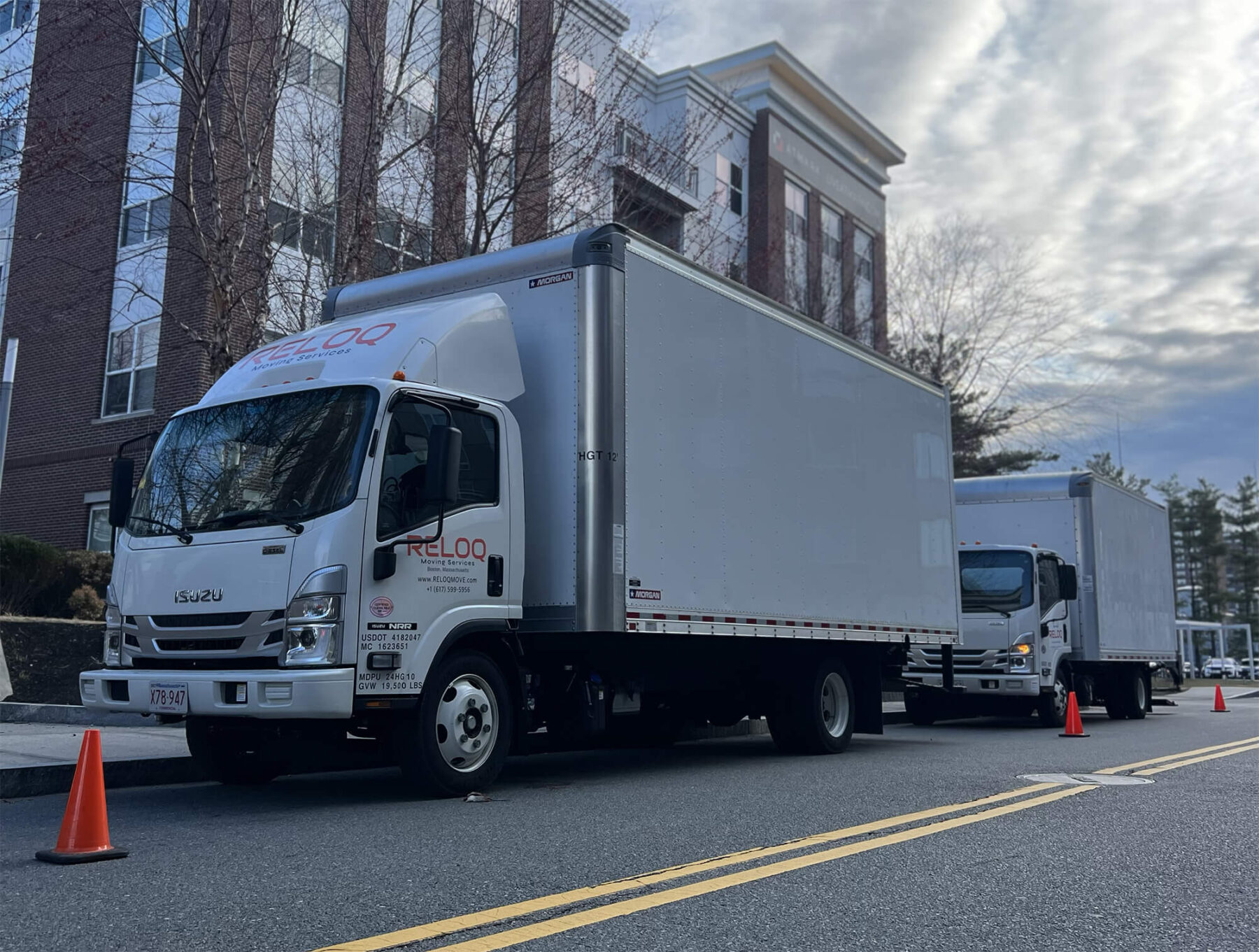
So, you’ve scored a sweet apartment in Cambridge. Maybe it’s got a skyline view, a fancy lobby, and one of those elevators that makes you feel like you’re entering a boutique hotel. Awesome. Now try bringing a sectional through it.
Moving into a Cambridge high-rise involves more than reserving a truck and throwing your belongings into boxes. Building management may require advance scheduling, insurance documentation, elevator reservations, and specific unloading arrangements. And here’s the kicker: those requirements vary from property to property. A building near Kendall Square might have entirely different procedures from a residential tower elsewhere in Cambridge. Before moving day, get the actual rules from your property manager.
Your couch doesn’t need another bureaucratic adventure.
First move? Call the leasing office or property manager. Not your friend who moved into a different building last summer. The actual management office. Ask for the property’s written Cambridge high-rise moving requirements, including:
Some buildings require reservations or refundable move-in deposits. Others have relatively straightforward procedures. Get the relevant forms early, especially if management needs to review documentation before approving your move.
A little paperwork now beats having a fully loaded truck sitting outside while somebody searches for the correct building manager.
COI stands for Certificate of Insurance. It’s a document used to provide evidence of an organization’s insurance coverage, generally identifying the insured company, insurer, policy types, limits, and coverage dates. Some apartment buildings request this documentation before allowing outside moving crews to work on the property. Why? Building management wants to verify that the company entering its premises carries the insurance required under the property’s policies.
Specific moving COI requirements may include coverage limits, certificate-holder information, or additional-insured wording. Now, don’t go assuming every Cambridge building requests identical documentation. They don’t. Ask management to provide its exact requirements in writing, then forward those instructions to your moving company. Movers and their insurers may need a little time to prepare, review, or update the paperwork, so the earlier they have it, the better.
And a COI isn’t an automatic golden ticket. Management still needs to confirm that the submitted documentation satisfies its requirements. Handle this before moving day. Preferably before you’ve packed your coffee maker and lost the ability to think clearly.
Let’s talk about the most popular piece of machinery in any high-rise relocation. The freight elevator.
If your building has one, ask whether movers must reserve it in advance. Some properties designate a service elevator for furniture transportation, while others permit moving through an approved passenger elevator. Either way, confirm the actual procedure. When arranging a freight elevator reservation for moving, find out:
Ask about elevator dimensions, too. A beautiful oversized wardrobe is considerably less impressive when it physically cannot enter the elevator. Share the confirmed reservation with your moving coordinator so the crew’s arrival can be planned around building access. And if your elevator booking starts at 10 a.m., that doesn’t necessarily mean your truck should arrive at 10 a.m. sharp. Parking, check-in procedures, and unloading access may require additional coordination.
An apartment move-in window is the period during which building management permits your relocation to take place. Some properties establish designated arrival and departure times to coordinate elevator usage, security, and access to shared spaces. A loading dock may have its own reservation requirements. Before confirming your moving schedule, ask whether a loading dock moving reservation is necessary and where the truck should enter. Check for vehicle restrictions, including height clearance, permitted truck length, and loading-area limitations.
Don’t assume the main residential entrance and the service entrance share an address. Some buildings have loading access around the corner or through a separate driveway. Which is a delightful discovery when you’re driving a moving truck through downtown traffic. Also, confirm whether the truck can remain in the designated area throughout the move or whether unloading time is restricted.
If your assigned window is missed, ask management how rescheduling works. That answer is worth having before you need it.
Here’s something people occasionally overlook: a high-rise move isn’t measured exclusively by the distance between the old apartment and the new one. The internal transportation matters. A truck might be parked relatively close to the building, but belongings still need to travel through the service entrance, along a corridor, into an elevator, up several floors, and finally into your apartment.
Now repeat that process for every furniture piece and box.
Elevator capacity, reservation duration, walking distance, and the number of required trips all feed into the overall workload. Some buildings also restrict noisy work or moving bulky items during certain hours. Whichever Cambridge movers you go with, pass all of this along during the estimate, so the crew plans for the building and not just the apartment.
Once the building arrangements are sorted, turn your attention to the household itself. Label boxes clearly by destination room. Kitchen, bedroom, bathroom, office. Make the labels readable without requiring somebody to decipher your handwriting like an ancient archaeological inscription. Keep shared hallways and emergency exits clear throughout the relocation. Identify oversized furniture before moving day and compare its dimensions with elevator openings, corridors, and apartment doorways. Some pieces may benefit from disassembly where appropriate.
Protect fragile belongings with suitable packing materials, particularly glassware, electronics, mirrors, and delicate furniture. If you’re working with a tight reservation window or have a substantial household inventory, professional packing assistance may be worth considering. That’s what RELOQ Moving Services offer, by the way. If you’re planning an apartment or condo move, feel free to contact us anytime.
RELOQ Express also offers moving and delivery solutions for eligible smaller shipments. Ask which service best matches your relocation rather than assuming a full apartment move falls under the Express offering. Provide the building’s written instructions, elevator arrangements, loading information, and any applicable insurance requirements when requesting your estimate.
Excellence in every move with years of experience in the moving industry
Continue